Why the Ball Can Be Dead Before the Over Ends
Understand when a cricket ball is dead and when an over is complete, so you can follow the umpire’s decision and know whether another delivery is due.
The common mistake is to treat a dead ball as the end of the over. That can make an extra delivery look like an error, or leave you expecting play to continue after the umpire has stopped it. In cricket, the ball becoming dead and the over being completed are separate decisions: one ends the delivery’s live action; the other depends on the count of valid balls and the applicable playing conditions.
Ask two questions: has the action from this delivery ended, and does the official count show the over is complete? The umpire’s call and the scorers’ record are the reliable guides when a dismissal, interruption or unusual ruling makes the answer unclear.
When is a cricket ball dead?
A live ball is one on which play can still produce a result. Batters may run, fielders may attempt a run-out, and the ball may reach the boundary. Under the Laws, a ball becomes dead in specified circumstances, including when it is finally settled with the wicketkeeper or bowler, a boundary is scored, a batter is dismissed, or an umpire calls dead ball. The exact ruling depends on the circumstances and any applicable playing conditions.
“Finally settled” is not always the same as “stopped moving”. A keeper who has gathered the ball may still be acting against a batter attempting a run. The umpire judges whether the action has ended; a spectator should not decide from the ball’s apparent stillness alone.
Once the ball is dead, the live action on that delivery has ended. Do not assume that every detail of the score or over count is settled at the same moment: the umpire and scorers determine the outcome under the relevant Law and playing conditions.
How does a dead ball affect the over count?
An over is generally made up of six valid balls, subject to the Laws and the match’s playing conditions. A delivery called wide or no-ball does not count as a valid ball towards that total, so an additional delivery is normally required. Other dead-ball situations can have different consequences for the count, and the umpire’s decision and official record take precedence over a spectator’s tally.
A delivery can therefore be dead while the over remains unfinished. For instance, a wide may lead to live play before the action ends; when the ball is dead, that wide still does not count among the over’s valid balls. A dead-ball call alone does not tell you whether the delivery counts: note the reason for the call as well as the scoreboard.
Think of a delivery round as a route with several stops: completing one stop does not mean the whole route is finished. The comparison is only about keeping the two counts separate; cricket’s official ruling decides what counts.
Which clues help you tell whether another ball is due?
Has a batter been dismissed?
A dismissal can make the ball dead, but it does not by itself prove that the over is complete. Check the umpire’s ruling and the recorded valid-ball count; if the count is short, another delivery may be due, subject to any relevant Law or playing condition.
Was the delivery called wide or no-ball?
These calls generally mean the delivery does not count as one of the over’s valid balls, although the action and scoring consequences depend on the call and the circumstances. Watch the umpire’s signal, then check the official over notation rather than counting every delivery that reaches the keeper.
Did an interruption or dead-ball call stop play?
A dead-ball call ends live action, but it does not by itself settle whether the delivery counts towards the over. The reason for the call and the applicable playing conditions matter, so use the umpire’s ruling and the official count to determine what happens next.
Does the record show six valid balls?
When the official record shows six valid balls and the action from the last delivery has ended, the over is ordinarily complete, subject to the Laws and any playing conditions that apply. If a disputed event or interruption affects the ruling, follow the umpire’s decision rather than treating a spectator’s count as final.
What should you check after each delivery?
- Check whether the umpire has signalled wide; if so, expect that delivery not to count towards the six valid balls, then verify the official over notation before deciding another ball is due.
- Check whether the umpire has signalled no-ball; if so, treat it as generally not counting towards the over, then rely on the scorer’s record for the next-ball decision.
- Check whether the umpire has called dead ball and why; if the reason leaves the count uncertain, wait for the official record instead of adding or removing a ball yourself.
- Check whether a dismissal has been confirmed; if the valid-ball count is still short, do not assume the over has ended, and wait for the umpire’s ruling on the next delivery.
- Check whether a boundary has been signalled; if the boundary ends the action but a ruling affects the count, use the official notation rather than inferring validity from the result.
- Check whether the recorded count has reached six valid balls; if it has and the last delivery’s action is over, expect the change of ends for the next over, unless the umpire or playing conditions indicate otherwise.
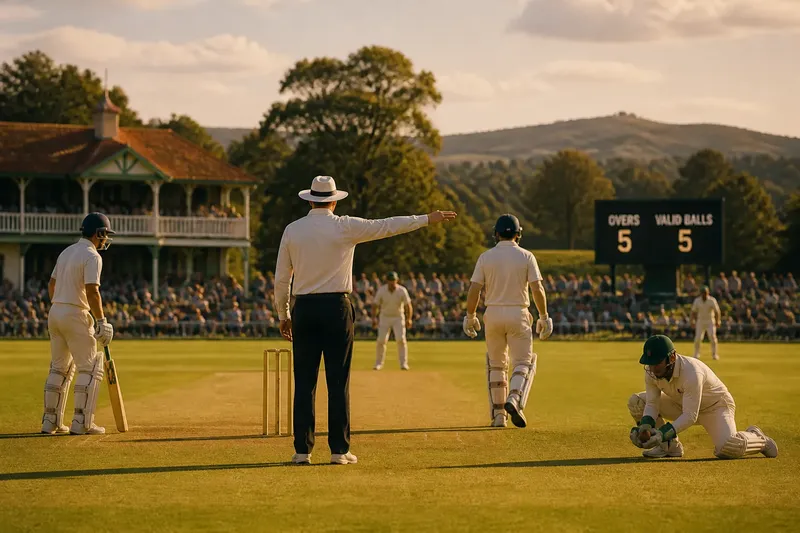
Say you are watching a one-day match and, for illustration, the scoreboard shows five valid balls in the over. A delivery is called wide, the batters stop after the ball is fielded, and the umpire’s ruling makes the action dead. Because the wide is not a valid ball towards the over, the record remains at five; expect another delivery, unless an unusual ruling or playing condition changes that decision. The wide signal and unchanged over notation are the observable clues.
How should you read the umpire’s signals?
Separate the signal for the delivery from the decision that ends live play. A raised arm can indicate a no-ball, and a horizontal arm can indicate a wide. A dead-ball call means the action has stopped. These signals answer different questions, and one does not automatically settle the other.
At the ground, watch the umpire and check the scoreboard after the action has ended. Over notation records the official count, not simply every delivery attempt. If the count does not advance, that is a clue that the ball may not have counted, but unusual rulings can complicate what you see. Television replays can clarify the sequence; the official decision remains the umpire’s.
Do not use a batter’s movement as your only guide. A batter may leave the crease after the ball is dead, while a fielder returns the ball to the keeper; neither action restarts the delivery. Conversely, apparent stillness does not always mean the action has ended. The Laws, the umpire’s ruling and the match conditions govern.
When should you rely on the official record?
You can often follow the match by checking the umpire’s signals, the recorded valid-ball count and whether the players are resetting. Those cues help distinguish a pause within an over from the changeover to the next one.
Some decisions are difficult to judge from the stands, particularly when a disputed dismissal, an interruption or a penalty is involved. Playing conditions may also affect how a match is administered. If the ruling changes the score or over count, use the umpire’s decision and official scoreboard rather than trying to adjudicate from a distance.
Keep the two questions separate: has the live action ended, and is the over complete under the official count? That distinction makes a stoppage, wicket or extra delivery easier to follow. Checking the over notation before assuming the field is changing ends is a small habit that helps you read the next moment correctly.