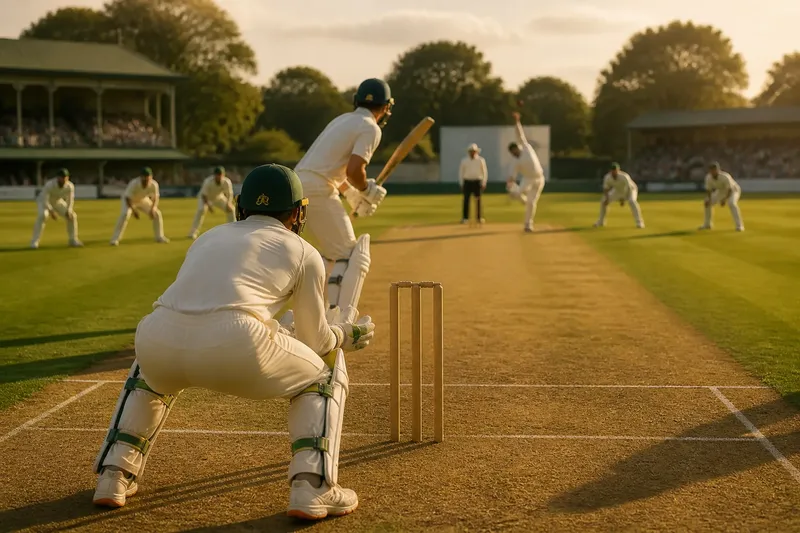
How the County Championship’s Long Season Changes the Shape of a Match
Follow the County Championship across a long season by reading match points, fixtures and table movement together, so each result has useful context.
The common mistake when following the County Championship is to treat every match as a standalone contest: note the result, then move on. That can obscure how a win, draw or loss affects a county’s points and position across the season. To follow the County Championship, keep one eye on the match in front of you and another on the fixtures still to come.
A knock-out event concentrates attention on survival in each tie; a league season spreads judgement across repeated fixtures. Follow the Championship match by match, and the difference becomes easier to see.
What does the table tell you before play starts?
Before the first ball, check the division table and the fixtures still to come. A team’s position gives useful context, but it is not the whole story: points, matches played and the remaining schedule all matter. Two counties next to one another in the table may have played a different number of matches.
County Championship points come from both the match result and performance during the game. Under the competition’s playing conditions, teams can earn points for a win, a tie or a draw, and batting and bowling bonus points are available in the first innings. The bonus points are awarded within set limits and conditions; the precise thresholds, points for results and any tie-break rules can change, so consult the current ECB County Championship playing conditions when an exact table calculation matters.
For ordinary viewing, start with these checks:
- Check points and matches played; if a county has fewer games behind it, treat its position as provisional, otherwise compare its points with nearby sides.
- Check the number and identity of remaining fixtures; if a close rival has a more favourable-looking run, allow for that context, otherwise focus on the matches each county still has to play.
- Check whether the side is chasing promotion, avoiding relegation or playing for position within its division; if its objective is at stake, judge the result against that aim, otherwise follow its progress without assuming every match has equal table pressure.
- Check the current playing conditions if bonus points or a tie-break could alter the order; if the rule is unclear, avoid calculating the table from memory and refer to the ECB regulations, otherwise use the published points total.
- Check whether rival counties are playing at the same time; if they are, wait for those results before treating a table position as settled, otherwise read the current table as a snapshot.
- Check the result and points after the match; if the county has gained ground, note the change against its nearest rival, otherwise identify whether it has held position or slipped back.
Keep these checks as context rather than a prediction. A high place can look secure, but results elsewhere and the remaining schedule may alter the picture.
How should you read the first innings?
At the start of a match, pay attention to the choices each side makes without assuming a quick result is the only aim. In a multi-day game, the batting side may value time at the crease and a useful total, while the bowling side may balance taking wickets against controlling the scoring. Conditions, the pitch and the state of the match all affect those decisions. First-innings batting and bowling can also contribute bonus points, subject to the current playing conditions.
Think of the season table as a map, not a scoreboard for the match in progress. The map helps explain why a result matters; it cannot tell you how an innings will unfold.
Say a county begins a match near the top of its division, with several fixtures still ahead. It loses early wickets but recovers to make a competitive total. The result remains unknown; the observable point is that the innings has kept the match alive and left both teams with work to do. Its batting performance may also affect bonus-point prospects, depending on the playing conditions. The season context sharpens interest, but it does not make the recovery a win in advance.
What changes when a match is drawn?
A draw is not simply a match with no consequence. A draw earns points under the County Championship playing conditions, though the precise award is set by the regulations; batting and bowling bonus points may also affect what each side takes from the match. Read the published result and points rather than assuming that every drawn game has the same table effect.
Then consider the teams’ objectives and matches left. A county protecting a strong position may value avoiding defeat differently from one that needs wins to catch a rival. The match may also reveal how a batting line-up handles pressure or whether a bowling attack can create chances, but those observations are context, not a substitute for the points table.
This is where a league differs from a single-elimination event. In a knock-out, a defeat can end a team’s campaign. In the Championship, one defeat changes the route through the season but does not necessarily remove the side from contention. Repeated matches give teams room to respond, while making consistent results matter.
How do fixtures and breaks shape the season?
Once you understand one result, look ahead to the next fixture rather than trying to forecast the whole campaign. Check when the county plays again, whether it has a run of home or away matches, and where it sits in the division. A break between games can make a table position feel settled, but rivals may still be playing.
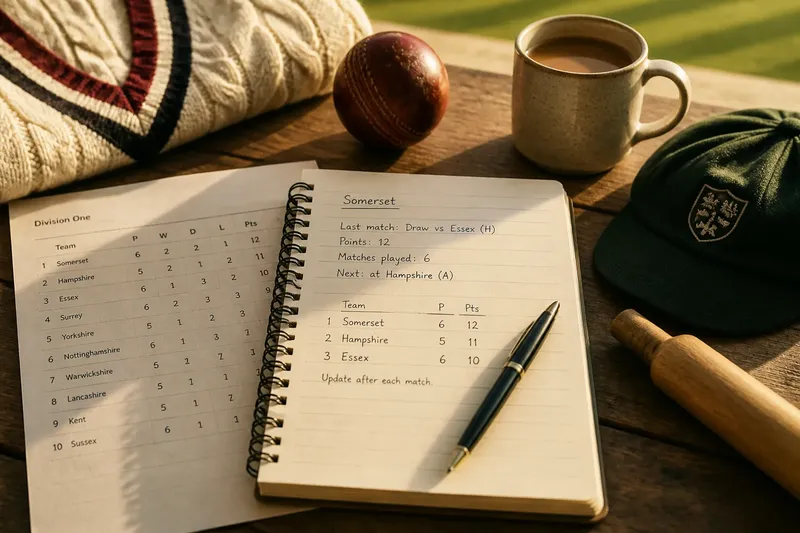
For a simple way to keep track, write the county’s latest result and next opponent beside its current table position. Update the note after each match. Like a bookmark in a long book, it helps you return to the season’s thread without mistaking one chapter for the whole story.
Imagine a county has just drawn at home and its next fixture is away to a nearby table rival. Record the draw, the points shown in the official table, the matches played by both sides and the next opponent. If the rival then wins while the county is idle, update the table comparison and note that the gap has changed; if the rival does not gain ground, keep the existing comparison and check again after the next completed fixture. The outcome is a clearer reading of the table, not a prediction about the next match.
Fixtures give each match a different texture. A meeting with a nearby rival can affect both sides directly; a match against a side lower down is still important, but may carry a different kind of pressure. Do not assume an opponent’s position makes a match easy. The conditions and play on the day remain decisive.
Which County Championship questions matter most?
How are County Championship points awarded?
Teams receive points for match results, and first-innings batting and bowling bonus points can also contribute under the playing conditions. The exact awards and thresholds are set in the current ECB regulations, so check those rules when calculating a close table.
Does a draw earn points in the County Championship?
A draw earns points under the competition’s playing conditions, but the exact award can depend on the rules in force. Check the current regulations, then read the draw alongside any bonus points and the table.
Why can a team’s table position change when it is not playing?
Other counties may complete fixtures and add points while that team is idle. Compare matches played as well as points, so a side with fewer completed games is not mistaken for one with a settled position.
When should I check the division table?
Check it before a match for context and again after the result to understand the effect. A further check after other counties finish their fixtures can show whether the position has shifted.
How can you follow the season without losing the thread?
Use a short routine after each match: record the result, note the points shown in the official table, check matches played and identify the next fixture. If bonus points or a tie-break could affect the order, consult the current playing conditions rather than relying on memory. Then ask what the county needs from the remaining games: victories, a steady run or simply to avoid giving ground to a close rival.
Keep the routine flexible. Early in the season, a single result is one entry in a long sequence. As fixtures run out, the same result can carry more weight because there are fewer chances to recover. The County Championship’s long season is easiest to follow when you notice that shift in pressure rather than expecting every match to feel like a final.
For the next match you watch, note the county’s position, matches played and next opponent before play, then compare them with the official result and table afterwards. That gives the County Championship long-season rhythm a shape you can follow, while leaving room for the cricket itself to surprise you.