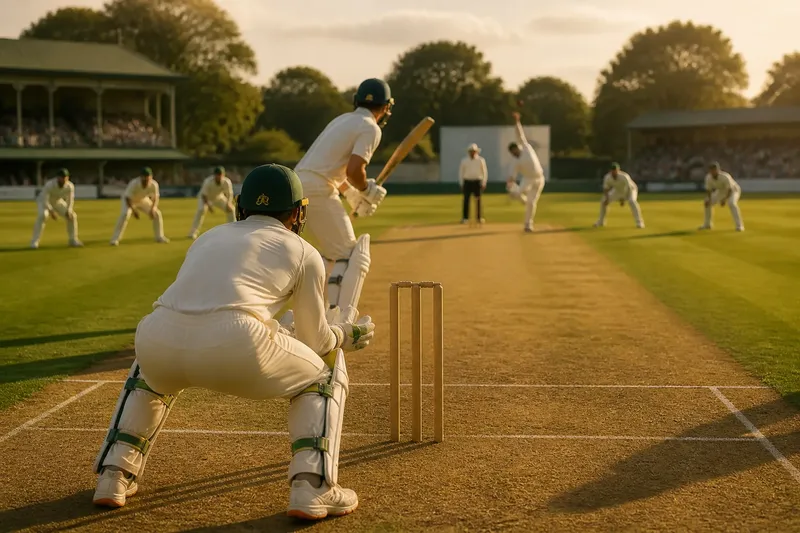
Deep Field or Close Catchers: Two Different Wagers
Deep field or close catchers changes the space a batter can use. Learn how to read the captain’s wager and follow the next delivery more closely.

The most common mistake when reading a cricket field is to count the fielders rather than notice the gaps between them. A deep fielder may stop a boundary, but the space that fielder leaves in front of the wicket can invite a batter to take a single or attack a different line. Deep field or close catchers is a choice about which space the captain is willing to offer, and what sort of dismissal or scoring shot the bowler is trying to draw.
What is the captain trying to make possible?
Imagine a hypothetical evening match in which a right-handed batter has settled at the crease. The bowler is delivering a good length just outside off stump, and the batter has repeatedly steered the ball through the point region. The captain must decide whether to put a fielder on the boundary behind point or bring extra catchers close to the bat.
Those arrangements are not simply “defensive” and “attacking”. A boundary rider can protect the score while leaving an easy single available in front of point. Close catchers can make a mistimed push dangerous, but they also leave more open grass for a well-placed shot. Each field signals a different wager: which area will the batter choose, and what might happen if the shot is not perfect?
To follow the decision, look at three things together: the bowler’s line and length, the batter’s recent scoring choices, and the fielders’ positions. A field makes most sense as part of a plan for a particular delivery, not as a fixed diagram that tells you what must happen next.
What space does a deep fielder leave?
A fielder on the boundary behind point or square leg is there to cut off a shot that has already travelled into the outfield. The captain may be guarding against a batter’s strength, especially if the bowler is likely to offer width or a short ball that can be cut or pulled. That protection can reduce the reward for hitting through the chosen area.
But the position also changes the batter’s options. If the deep fielder is set behind point, the batter may play softly into the vacant region in front of point and run a single. If the bowler attacks the stumps, the batter might work the ball into a gap on the leg side instead. A boundary rider can therefore shape scoring without preventing it: the captain may concede a low-risk run to limit the chance of a much larger hit.
Watch how quickly the deep fielder has to move. If the ball reaches that player regularly, the batter is finding the intended target. If the fielder is stationed wide but the ball keeps passing through the inner ring, the protection may be aimed at the wrong route. The bowler’s accuracy matters too. A plan to cramp the batter for room will not work if repeated deliveries drift into the batter’s preferred hitting arc.
What do close catchers ask the batter to risk?
A close catcher stands near the bat to take an edge or a short, mistimed shot. A slip fielder waits behind the batter on the off side; a short leg stands close on the leg side, often in a position to intercept a glance or defensive deflection. These positions can be especially threatening when the ball is moving, turning, or bouncing in a way that makes clean contact harder.
Their presence also changes the batter’s picture of the field. A batter who sees a catcher near the bat may choose a safer, straighter defence rather than play away from the body. That can help the bowler attack the stumps or draw a tentative push. Yet if the batter feels able to meet the ball confidently, the open outfield can be a tempting reward for a firm stroke.
Close catchers are therefore not merely waiting for a mistake. They help define which shots feel risky. A slip may make the batter reluctant to drive away from the body; a short leg may discourage a casual flick. The captain is using the threat of a catch to influence the next choice, while accepting that a shot beaten past the close fielders may find space.
How does the same batter change the wager?
Return to the hypothetical match. The batter has scored through point, but the bowler has begun landing the ball closer to off stump. The captain moves the boundary fielder a little squarer and brings in a slip. The bowler’s aim is now to make the batter choose between leaving, defending, or driving at a ball close enough to threaten the outside edge.
Say the next delivery is on a good length and moves away slightly. The batter reaches for it and the edge falls short of slip. The arrangement has not produced a wicket, but it has made the intended shot harder and created a catching opportunity. On the following ball, the batter stays more compact and taps the ball into the vacant point region for a single. That, too, is an observable result of the field: the batter has taken the safer option the plan left open.
Now imagine the bowler responds by drifting too far outside off stump. The batter can reach the ball comfortably and punch it through the gap before the boundary rider can cut it off. The captain’s wager has become less attractive because the bowler has offered width without creating the risk of an edge. A field placement cannot rescue a delivery that gives the batter both control and room.
That sequence shows why a captain may move one fielder rather than make a dramatic change. Shifting a deep point squarer can make the single less automatic while a slip remains in place. Removing the slip to add another boundary fielder would express a different priority: reduce the damage from a clean strike, even if the batter is less likely to face a close-catching threat.
Which field suits the moment?
Neither arrangement is inherently better. A deep fielder often makes sense when the batter is repeatedly clearing the inner ring, the bowler is likely to offer a hittable length, or the match situation makes a boundary particularly costly. Close catchers may suit a spell in which the bowler can keep the batter uncertain about movement, bounce, or the line of attack.
Conditions and match context matter. In a limited-overs format, fielding restrictions and the number of overs remaining affect where fielders may stand and what a captain can afford to concede. In a longer innings, a captain may be more willing to leave a scoring gap if it keeps a catching opportunity in play. The laws and competition playing conditions determine the permitted positions, so follow those rules rather than assuming every field can be set at any moment.
The batter matters as much as the format. A player who prefers to work singles may not be troubled by a boundary rider in the same way as a batter looking to clear the rope. A close catcher may unsettle one batter but have little effect on another who trusts a straight defensive technique. Captains adjust to what the batter is actually doing, not just to a reputation or a theoretical strength.
What should you watch on the next delivery?
When the captain changes the field, check whether the bowler changes the plan too. A fielder moved to the boundary behind square is easier to understand if the next ball is short or directed towards that area. A slip makes more sense when the bowler is inviting a stroke that could take the outside edge. The two choices should support each other.
- Locate the deepest fielder and note which boundary area is being protected.
- Look for the largest gap inside the ring and ask whether the batter can reach it with a controlled shot.
- Notice whether close catchers are on the off side, leg side, or both.
- Watch the bowler’s line and length; a field may be set for a delivery that does not arrive.
- After the ball, see whether the batter scored, defended, or played the shot the captain appeared to invite.
- Check if the captain moves a fielder after the result, rather than assuming the same plan will continue.
These observations help distinguish a deliberate concession from a missed opportunity. A single into a clear gap may be exactly what the captain expects if the field is designed to prevent a boundary. Equally, a dot ball with no threat of an edge may not mean the close-catcher plan is working; the batter may simply have chosen not to attack.
Why might a captain choose one field over the other?
Does a deep fielder mean the bowler expects a boundary?
Not necessarily. The fielder may be guarding a batter’s strongest area or limiting the cost of a particular length. Check whether the bowler is still trying to make the batter defend or edge the ball.
Are close catchers useful only when the ball is moving?
Movement can make an edge more likely, but a close catcher may also pressure a batter into changing a comfortable shot. Their value depends on the bowler’s accuracy and whether the batter feels able to play freely.
Can one field protect the boundary and create a catching chance?
Yes. A captain can keep a boundary fielder in one area while retaining a slip or another close catcher. The arrangement still leaves other spaces open, so notice which scoring option the batter is most likely to take.
What if the field seems to invite an easy single?
The captain may accept that run to avoid a more damaging shot, or may be hoping the batter takes the single and exposes a new batter to the bowler. Watch the next ball and any field change to see which purpose seems more likely.
How can you judge the result without waiting for a wicket?
In the imagined match, the slip has not taken a catch and the boundary rider has not stopped a boundary. Still, the field has influenced the contest: the batter has defended one ball, taken a single into an offered gap, and attacked when the bowler missed the intended line. The useful question is not simply whether the field produced a dismissal. Ask whether it made the batter use the space the captain was prepared to offer.
That is the clearest way to read deep field or close catchers. The deep fielder protects a route but may leave a quieter one open; the close catcher threatens a mistake but gives a clean stroke room to escape. Watch the gap, then watch the delivery. The field is like a doorway held open in a busy room: it shows where movement is easiest, but the person choosing whether to walk through is still the batter.